What’s Inside
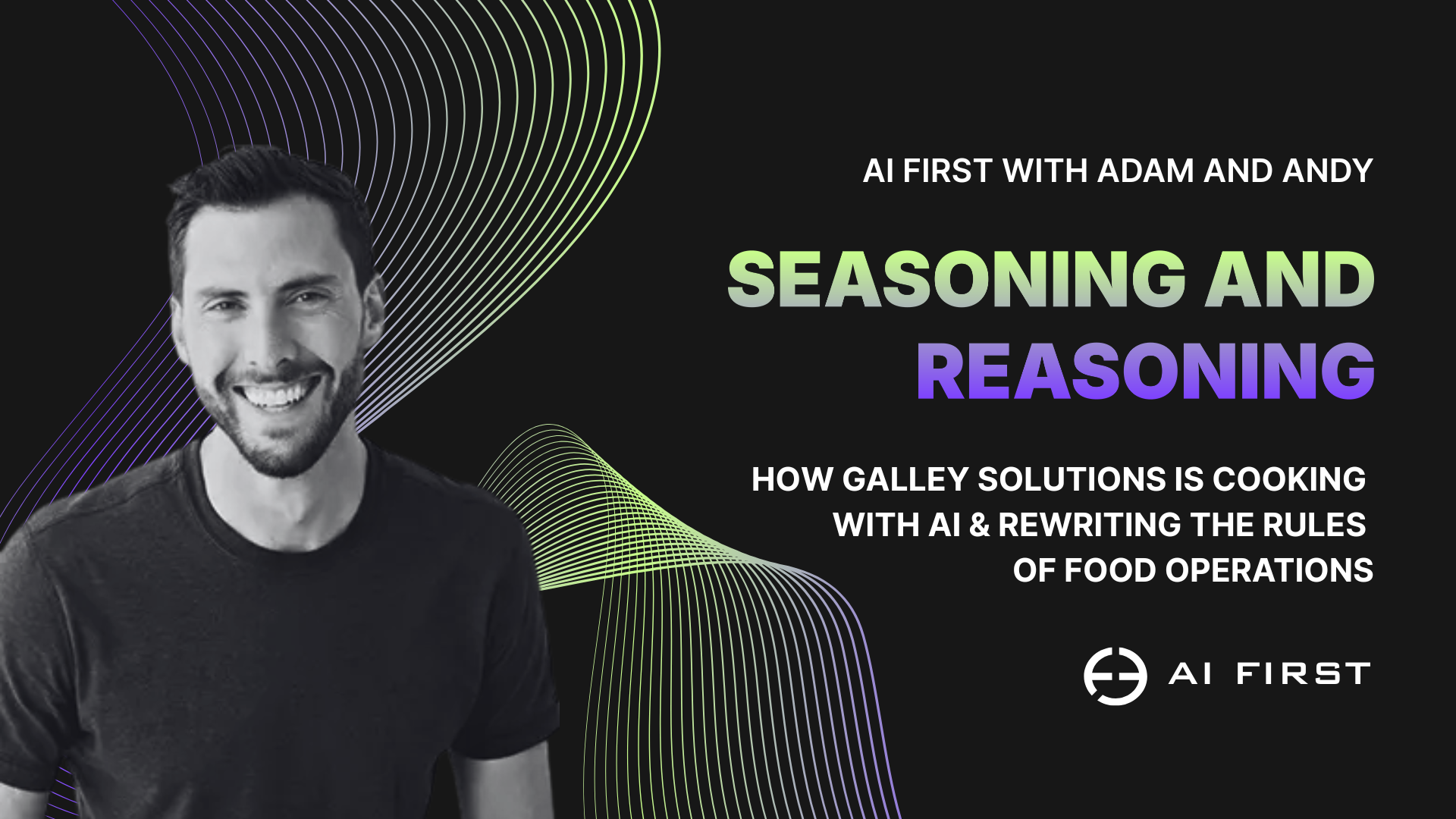
This week, we’re diving into a powerful episode of AI First with Adam & Andy, featuring a conversation with Benji Koltai, CEO & Co-founder of Galley Solutions.
His story offers one of the clearest examples of what it looks like to:
Build vertical AI that actually works
Structure messy, analog data into something AI can reason over
Lead a team through the mindset, fear, and opportunity of AI adoption

We break down the episode in this newsletter, highlighting the key patterns and reflection questions every leader can use.
The Origin: Fixing the “Analog Kitchen”
Benji’s journey started in commercial kitchens where he discovered most operations still run on:
Paper notes
Whiteboards
Spreadsheets
Human memory
For someone with Crohn’s disease, wrong labeling (like “gluten-free”) wasn’t just frustrating, it was dangerous.
The core insight:
Food service didn’t need a better inventory tool, it needed a structured, accurate recipe-first system of record.
Everything flows downstream. Recipes → ingredients → prep steps → quantities → costs → nutrition → purchasing → production.
From that idea, Galley Solutions was born.
Why Galley Became a Vertical AI Powerhouse
Long before ChatGPT, Galley focused on two things:
a) Deep data structure
They created a precise schema for:
Recipes
Ingredients
Quantities
Prep methods
Yield
Inventory impact
Production workflows
This meant that once LLMs became powerful, Galley had a clean, trusted, structured domain for AI to plug into.
b) API-first from day one
Everything in Galley is accessible via API which later made integrating with LLMs natural and powerful.
c) A clear vision of where AI would fit
Benji’s insight:
“In our world, AI won’t predict the next word, it will predict the next action.”
And once the data was structured enough, that’s exactly what they built.

The Leadership: How Galley Operates AI-First
One of the most powerful parts of Benji’s story is how he approaches the human side of AI adoption inside his team.
a) “Ask AI first.”
Benji’s rule: before you ask a colleague, ask AI.
CS team uses AI connected to GitHub to answer product questions
Developers use AI coding tools, reinforced through mandatory hackathon use
Everyone experiments with multiple models (Claude, GPT, etc.)
It’s not optional…..it’s cultural.
b) Model the behavior as a CEO
He shows the team how he uses AI.
He posts workflows.
He demonstrates.
He experiments publicly.
People follow what leaders do, not what leaders say.
c) Name the fear directly
Benji speaks openly with his team:
“AI might take your job. So what does that mean for the skills you develop now?”
By addressing the emotional reality, resistance dissolves. Your team needs intentional space to:
Express their fears
Understand the opportunity
See leadership model the behavior
This combination accelerates adoption more than any training program.
Reflection Questions for Your Organization
Inspired by our conversation with Benji, here are some foundational questions any leader can use:
1. Could AI structure data that you have today and turn it into something truly usable?
What critical information still lives in spreadsheets, notes, Slack threads, or individual expertise?
2. Where could AI move from providing “insights” to driving “do-this-next” decisions?
Where is the equivalent of “predict the next action”?
3. Are you giving your teams the space to grow into this?
Do they have permission to:
voice fears,
explore opportunities,
and see AI used by leadership every day?
These questions are key to any AI-First transformation.
Listen to the full episode
It’s one of the most practical, eye-opening conversations we’ve had on what real AI adoption looks like.
And don’t forget our AI First Community Call
On December 16th, Andy & Adam will unpack the most important lessons from 2025 and reveal their early predictions for how AI will reshape business in 2026. As we move into the New Year, this is one you don’t want to miss!
Stay Curious. Stay AI-First.
Forum3 | Helping leaders build AI-First organizations that grow, adapt, and win.